
Singapore buying guide · Sources checked 22 November 2026
One plate, two cars
Illustrative example · PLATE A
Saloon uses PLATE A
Registration number moves
Accident row: could be the saloon with the same plate
Match the date and the car, not only the number.
On this page: Who can get the report? · Read the plate and chassis together · Check what the row means · What to do without a report · Before paying
Ask who can get the GIA report
At a viewing, the dealer says the car is accident-free and offers to hold it if you put down a deposit. Before deciding, ask what the dealer means by “accident-free” and who is currently listed as the registered owner. A dealer can be selling a car without being the person who can obtain its report.
GIA’s VARH FAQ and sample say the registered owner can order through Singpass Myinfo. A prospective buyer cannot order it simply by typing in a plate. Ask the owner to obtain it through the official GEARS service, agree who will pay for it and ask to see the full, dated report rather than a cropped screenshot. The FAQ lists S$90 before GST; check the current fee before ordering. The same FAQ says corporate owners cannot use Myinfo Business for this purchase. If the dealership or another company is the registered owner, ask whether it has a prior copy and use the records-and-evaluation route below if it cannot get one.
Match the chassis in the header, then read each accident row
Start with the report generation date, current registration number, chassis number and make/model. Ask the seller to show the matching vehicle particulars and have the evaluator verify the chassis number on the car if it is hard to locate. The LTA used-car transfer guide advises buyers to compare the car’s identifying details with LTA records.
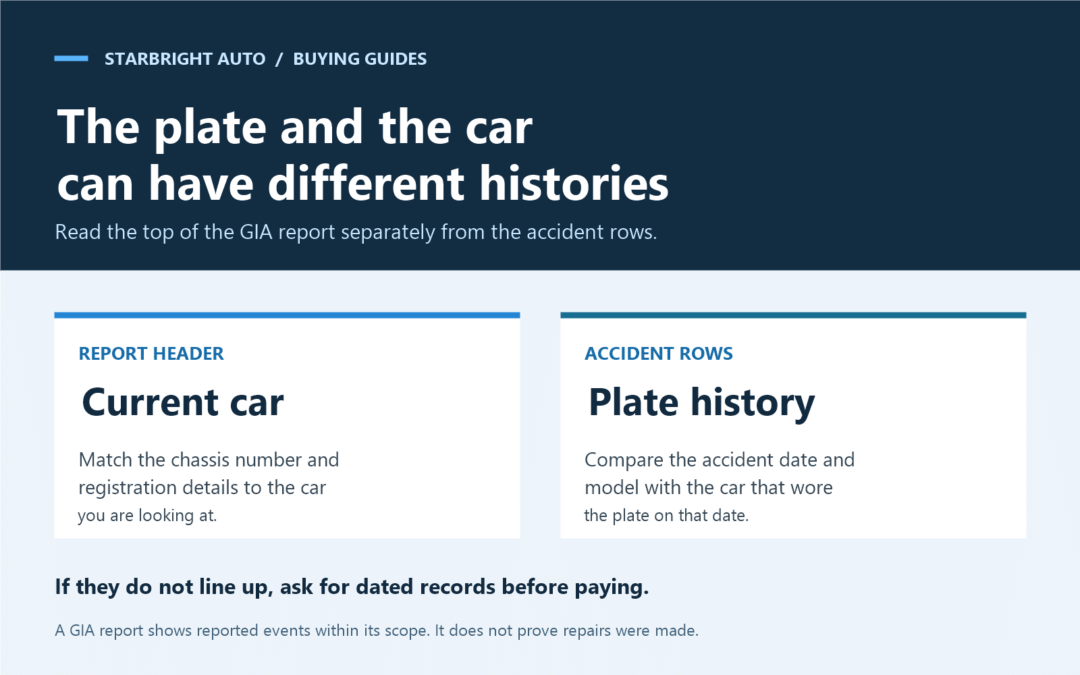
Then read the accident rows. The chassis in the header identifies the current car. GIA’s sample explains that the entries follow the vehicle registration number, also called the VRN, and can include reports from a different vehicle that previously used that number. LTA’s number retention guidance explains how a retained number can move to another eligible vehicle.
On a small screen, scroll the table sideways to see each column. Keyboard users can focus the table region and use the arrow keys.
| What you find | In this fictional viewing | What to ask next |
|---|---|---|
| Report header | Current car is a hatchback. Its plate and chassis match the report. | The report header is for the car in front of you. Check the individual entries next. |
| Accident row | Same plate, but the entry names a saloon. Accident date: 12 February 2022. | Ask what vehicle used the plate on that date. Don’t count the accident against the hatchback solely because the number matches. |
| Seller’s explanation | Seller says the hatchback only received the plate in April 2024. | Ask to see dated plate-change evidence and compare it with the hatchback’s service and repair records. If the dates cannot be reconciled, leave the entry unresolved. |
If the records support the date the number moved, the saloon entry is less likely to describe the hatchback. Still ask about any earlier number the hatchback used, and request records tied to its chassis, especially for the period before the change. A report for the current plate may not tell you about that earlier period.
Ask what happened, not just whether there’s a row
GIA’s sample distinguishes the accident date from the date the report or addendum was submitted. Use the accident date to ask the seller which part of the car was hit, which workshop did the work and whether they can show the job sheet or final invoice. A report entry doesn’t establish that any repairs were done, how serious the damage was or who was at fault. If the row reads “Reported by other party”, GIA says it was filed by another vehicle’s owner or driver, without a report from this vehicle’s owner or driver. The label itself doesn’t settle whose account was right. GIA sample report and notes.
An empty result has limits too. VARH shows up to six years of insurer reports from the date it was generated. If nobody reported an accident to an insurer, the event won’t appear in this database. Check when the report was produced before relying on it.
If you can’t get a report, ask for evidence tied to the chassis
Ask the seller to state in writing what they know about prior accidents, panel replacement and structural repairs. Ask for dated workshop invoices and, if available, repair photos or job sheets. The seller can redact previous owners’ personal details while leaving enough of the vehicle identifier, repair date and work description for you and the evaluator to match the record to the car.
With a dealer, ask about Part A of CASE’s SAFE Checklist. It asks specifically about accidents affecting the chassis structure and allows the dealer to say it is unaware. If the answer is “unaware”, record it that way rather than reading it as “no”. Commission a pre-purchase evaluation that covers the chassis and bodywork. Give the evaluator any repair information so they know where to look, and ask what they could not assess. CASE lists visible chassis damage and welding as possible clues; the evaluator should interpret them in context. See our pre-purchase evaluation versus LTA inspection guide for what the checks cover.
Settle the evidence before handing over a deposit
You can keep a car on your shortlist if the seller explains a repair or a plate mismatch and the evaluator can check what matters. If the seller cannot explain a relevant collision or won’t allow an independent assessment, wait. If you do reserve first, record the exact car, the inspection deadline, the evidence required and what triggers a refund. Ask the dealer to confirm the outcome and timing in writing. Use our deposit conditions guide to review the wider terms.
Message you can send the seller:
“Could you show the full GIA report if available, confirm the chassis number and any previous plate, and send any dated accident-repair records for this car? If independent evaluation is only possible after a deposit, please confirm the inspection deadline and refund terms in writing.”
View a car with the records in hand
Browse StarBright Auto’s pre-owned cars or book a test drive in Bukit Batok. Tell us which car you’re considering and ask what vehicle and repair records are available before you visit.